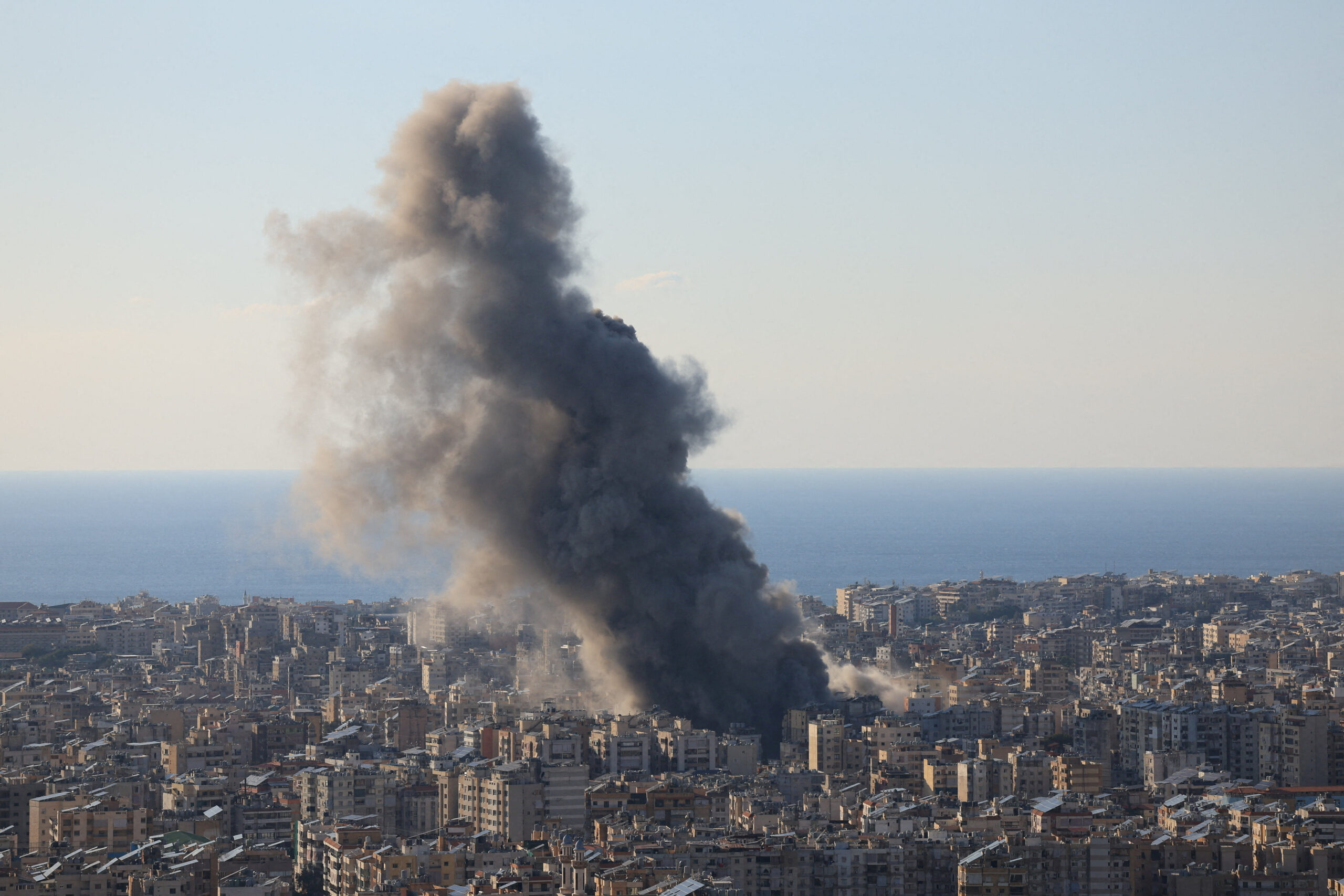
Last issue, in a chat with Al Gillespie, it seemed like the possibility of conflict in Iran was 50-50. In the weekend between that mag going to print and arriving on stands on Monday, Israel and the United States carried out a bombing strike on Iran which has led to retaliatory strikes against the gulf states and Israel. I went back to talk to Al, to ask him what the coin landing this side up means.
Dylan: So, just how bad is all the stuff that’s happening in Iran right now? Is this the start of a ‘big one’?
Al:
That’s actually a very complicated question. It depends on what perspective you look at it from. It’s bad in terms of international law because it really threatens the structure of a rules-based order. It’s bad in terms of the humanitarian consequences that will follow from the intervention because there’s a strong chance of a civil war could break out. The only good point is that this is not the Third World War. China and Russia won’t get involved. Even though it will be a very bad war, it’ll be a regional war, it won’t be a global one.
Dylan: Yeah, you get people coming and saying this might be like the tipping point, like we’re due for the next big war.
Al:
This isn’t that.
And like, I’ve been speaking a lot in the media in the last couple of days and I’m picking up a lot of emails and phone messages from all over the place and a lot of people are just completely freaking out by what’s going on. But this is not the Third World War.
Dylan Jarrett:
The second question I had was what is this conflict gonna mean for us in New Zealand?
AL:
Well, at a theoretical level, we have to work out whether we state whether the intervention was legal or illegal. In most countries, it’s going one way or the other right now, but at a practical level we’ll have to work out is whether we would be willing to join a body like the International Court of Justice like we’re doing with regards to challenge Russia with their invasion of Ukraine.
So, do you make a stand on trying to solve its legality? Second, do you deal with the refugees? Third thing, do you physically get involved? Do you send our troops over?
Dylan: I had seen headlines about Luxon making a statement. Pretty sure what he said was something along the lines of ‘We’re not in a position to judge; that’s up to America and Israel to sort it out.’
Al:
The problem with that kind of thinking is that everyone becomes their own judge. And so if you want to work out whether it’s legal or illegal, send it to the International Court of Justice or the International Criminal Court and let some international independent experts tell you what the result is.
Dylan: Do you think that this is going to have a big impact on our fuel prices? That’s something people talk about whenever there’s a big conflict in the Middle East – it tends to be all they know about it.
Al:
I think it will have some impact on the price of fuel. But my guess – and this is only a guess – is that it won’t be as large as people expect because they’ve now turned Venezuela on. I think, yeah, it will be bad, but I think that the coincidence of timing between them getting control of Venezuela and this is uncanny.
Dylan: What do you think the future of Iran and the region is going to look like because of this all?
Al:
My biggest fear for Iran is that it will turn into a civil war, because even though there’s a lot of focus on the protesters right now, there will be a huge amount of people in Iran who are conservative and traditional and the risk is that this will turn into a very nasty conflict between those who want reform and those who want the status quo. If that happens, you will see refugee surges going towards Europe, unlike anything you’ve seen for the last 10 years.
These things are so easy to start and so difficult to finish, and if it turns into a nasty civil war and humanitarian catastrophes happen, it will be like a magnet for the West to get involved. But the problem is once you get involved it’s very difficult to get out. I think that the chances of history repeating with Iran are exceptionally high.
Dylan Jarrett:
Last question: I think a lot of people are sort of wondering ‘what are we supposed to do.’
Are we supposed to just sit sort of powerlessly while America carries out things like this? Or are there things that we can do to avoid our country being dragged and made complacent in this stuff.
Al:
You guys have to get more vocal. You have to get more involved. I’m 59 years old. If another war comes out, they’re not coming for me. They’re coming for you. Your generation is facing risks which my generation thought had disappeared.
Your first obligation to your generation is to educate yourself. Find out what the risks are, and at the same time, don’t become Utopian.
I mean, let’s be honest for a moment. Iran was not a nice regime. Iran is repugnant at what the way it treats its people and the cat and mouse it plays with the international community. People are sort of lining up like a football game. This isn’t about that, it’s about finding international mechanisms to deal with human rights, or with arms control. The world is much more complicated than we want it to be, and it’s your job. Your job is to try to work out how complicated it is and what the answers are.