By Aya Birt
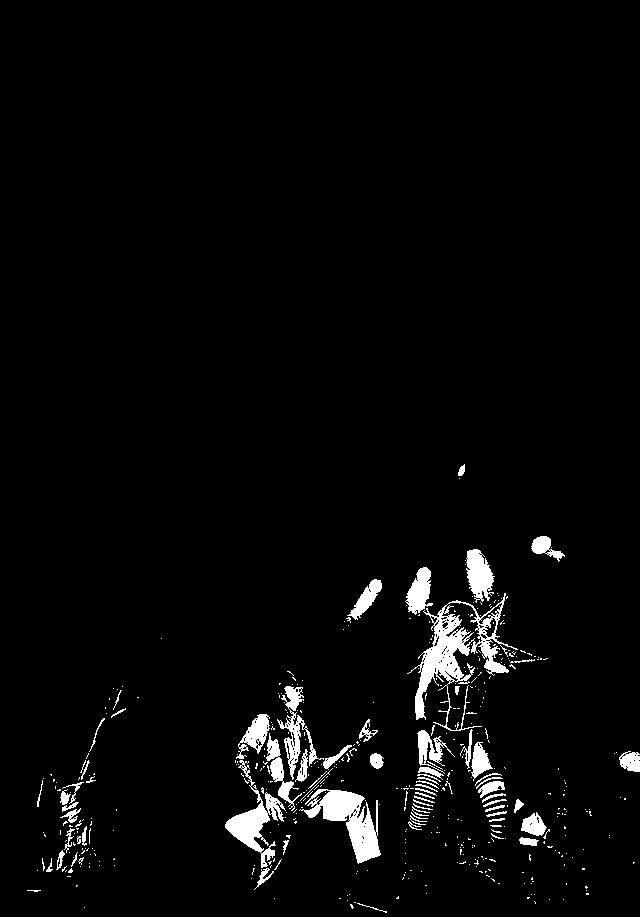
“Goth” is the term for a political and music-based subculture, born out of the existentialism of the 1970s. Much like many of the other emerging genres at the time it concerned itself with personal anguish, autonomy and often very dark themes that commented on the human experience. A melting pot of dark romanticism, literature, politics and distinctive aesthetic tastes. These days it is more commonly associated with a specific style of dress. We make connections with the occult and the 1980’s Satanic Panic- widespread moral hysteria beginning in the Americas.
(Counter-culture based on satanism is very infrequently actually about belief in the devil and more about autonomy. Ideological violence was common within extremist groups and although it’s only a very small part of an extremely complex theology, they often used physical displays to declare that their bodies belonged to themselves and not an oppressive religious society. Jenny Hval’s ‘Girls Against God’ presents a wrenching fictionalisation of 1980’s Norway and the emerging black metal scene.)
We assume ‘costume’ to always be a mockery. That is to say, most of the time we assume ill intent. The phrase “my culture is not your costume” is a desire to stop ‘outsiders’ from reducing a whole lived experience down to a specific style of dress, a way of looking, a one dimensional creature. A prepared rejection to being fundamentally misunderstood. When you express yourself loudly people assume that it is a performance. Then it becomes known only as a performance. Within the goth aesthetic you can clearly see elements of the punk genre that inspired it (very focused on counter culture and antiestablishment) in the heavy adornments and bold hairstyles. The traditional makeup incorporates elements recognisable from drag performance. Many small but very important historical addendums that help distinguish a culture from an empty visual display. Adopting macabre or disturbing imagery in many ways, was an act of denying ‘the norm’ and clinging to individuality.
There’s an interesting argument to be made because the nature of culture is to change. If we try to argue that Goth culture should only relate to music then eventually someone, somewhere in the dark recesses of the internet is going to bring up the fact that “Gothic” is a term relating to that which is barbaric or medieval, coined by Vasiri all the way back in the 1500’s. One could argue that the subculture is a mockery of gothic architecture and literature from way back in the Victorian era. (Aside from being antithetical this makes the assumption that all goths are Mary Shelly wannabees. The real statistic is probably only around 80%.) On the other hand you run the risk of being unable to see the forest for the trees, so to speak, because mockery and mimicry are two very different concepts.
One of the important qualities of ‘subcultures’ is that sometimes they’re so close-knit that they may as well exist within a whole different world. One of my favorite bands is Bauhaus. I knew who Bela Lugosi was years before I heard about Edward Cullen. My wardrobe is only dark colours. Still I am not goth even though I embody many ideas and characteristics of the culture. There’s no intention behind my wardrobe or my choice in music. Potentially that’s how we should make a distinction between culture and costume. A shared purpose or ritual that you may never become privy to. Music has always been political and never not a product of its time.