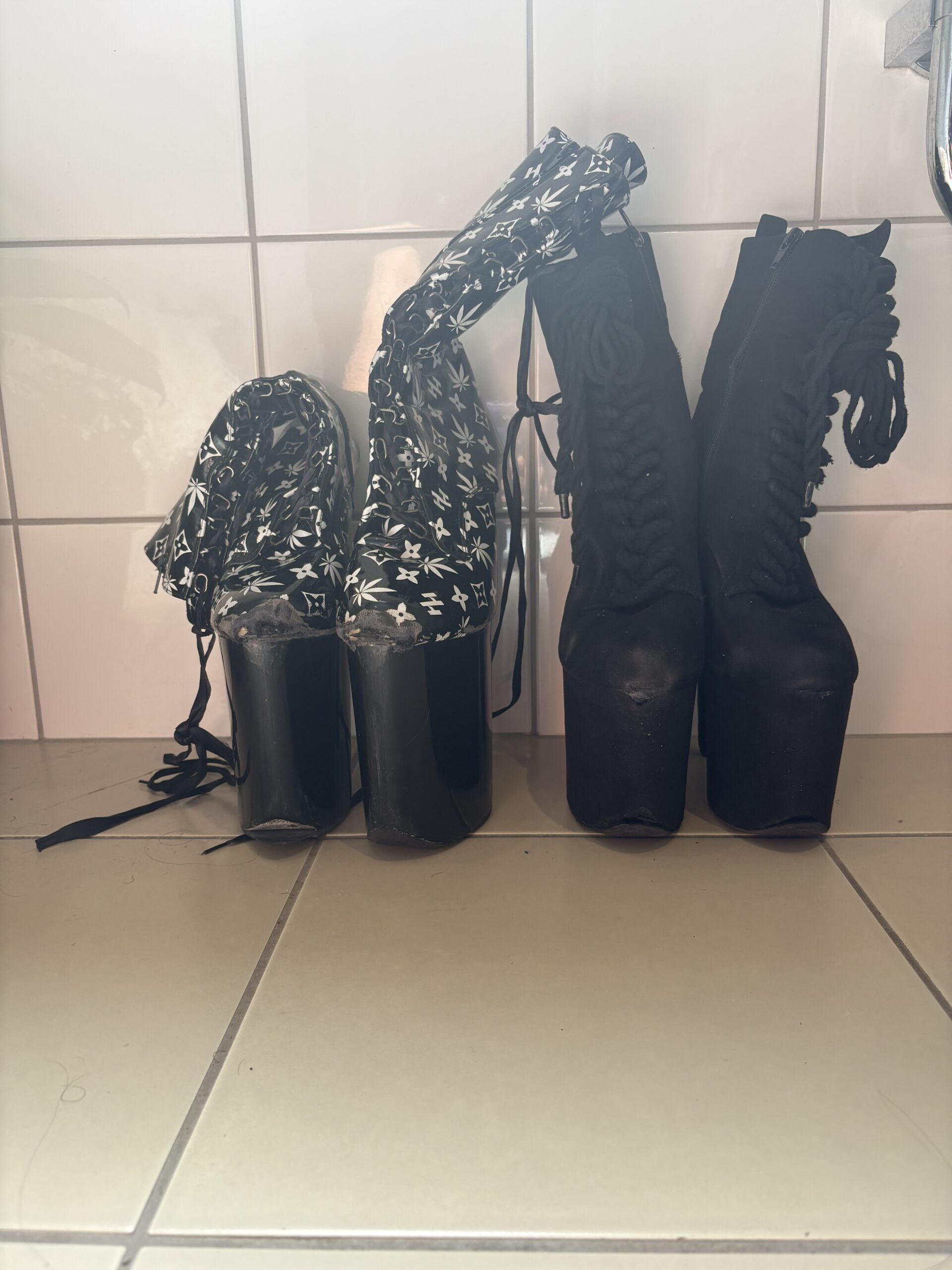
Brittle Splits is a 30-something year old Waikato Arts alumni, who wears nipple pasties and fishnet tops onstage (in 9 inch boots) just for fun—and feminist expression, duh. Here, she outlines the mediascape of pole politics within Aotearoa. She recommends strippers to follow (Online only. Do. Not. Stalk.) for equal parts delicious dance and political prowess.
In 2024, I spoke to stripper Mothers Lexi Liquid (@madeleine_rh) and Lilith Lee (@lilithleeperformer at the time of publication). We chatted about the myths that circulate online and in studio spaces about the origins of pole dance. Basically, the central thesis of our discussion was, “fuck SWERFs”. The article outlined the progress by 19 Fired Up Stilettos, an advocacy group for stripper rights, at the time of publication.
Since then, both women have gone on to develop further stripper advocacy. Lexi co-hosts an educative podcast, and Lilith is a founding member of Strip the Stigma.
Also, allyship is trending. Even my home studio, Altitude, are vibing sex-posi feminism in their blog series, An Insight into Life as a Sex Worker. Extra ethical bonus points to them for compensating the interviewees!
Salient, our Wellington-based sister student rag, covered 19FUS protests alongside mainstream media as early as 2023 when it all kicked off. They went on to review a FUS fundraiser event that a writer attended in 2024, and reviewed the progress made by the advocacy group.
Massive, Massey Uni’s mag, joined the korero in 2025 and featured an article in a similar vein – The Heels that Built This House. This is well worth a read as it further exemplifies the “fuck SWERFs” thesis. In the article, Hannah Flacks argues that an emphasis on pole as “sport” or “fitness” above all else is harmful to other women – our stripper sisters. Flacks interviews the inimitable Vixen Temple (@vixentemple.666), a comrade of Madeleine’s.
Madeleine and Vixen have recently joined forces to educate civilians and pole hobbyists on the ethics of pole dance. In late 2025 they launched Stripped & Unscripted. Lilith has teamed up with other savvy swers to bring educative, sex-posi feminism to studios around the country. The nuance and reflexive praxis of their mahi is pure feminism. So, are we post-feminism for SWers? Un-fucking-likely. This conversation is not over.
But, what can I add to the conversation? And what role does student media play in covering sex work as a topic? As a neurodivergent pole dancer and amateur performer/hobbyist, all I can do is listen, unlearn and relearn in line with values of justice—fuck SWERFs, remember? What student media does by publishing coverage of stripper rights is AMPLIFY the voices of those who are already putting in the mahi.
And what can you do? Well, start below with your guide to learning more about the sex work, entertainment and performance industry in Aotearoa. Then maybe tip the women you learn from (or at least share to story).
Civilian Education
Stripped & Unscripted Podcast
Madeleine / Lexi Liquid and Vixen Temple
@stripped_unscripted
With episode titles that read like sassy academic journal articles, Stripped & Unscripted covers topics from respectability politics and tone policing to online censorship and the differences between objective empirical fact vs subjective and relative factors. Their approach is intrinsically feminist, neurodivergent and anticapitalist.
The passion these women have for the topics they speak on is palpable, although the audio is far from professional quality. The acoustics give the impression of snatched time, with unsteady levels summoning a mental picture of an excited speaker who cannot sit still enough to keep the mic steady at times. This amateur use of digital technology screams confident activism and grassroots voice over political polish. The communicative tone and style of both women is direct, deep and divine – their voices carry meaning and intention.
As a labour of love, and an aspect of their activism and advocacy, Madeleine and Vixen give hours to sharing their perceptive discussions. As is customary in podcasts, they ask for tips to support. For the first time in my life I spent money from my own pocket to support this podcast. That’s how valuable it is.
Strip the Stigma
@stripthestigmanz
Strip the Stigma is an organisation dedicated to paying sex workers to deliver studio-based pole workshops. Not only do they run twerk, lap dance and pole flow workshops, they also educate. They host community discussions and offer personal insights into the stigmas against the sex work industry. They share how such stigmas show up within dance and fitness spaces, and what civilian hobbyists can do to avoid perpetuating such harm in their language and behaviour.
This is not a labour of love. It is a passionate and business-savvy endeavour to provide strippers with access to safe paid work. Strip the Stigma events give civilians access to the knowledge and skills of these women via fair compensation.
Sex Work Rights Education
We Are Not Their Girls Zine
We Are Not Their Girls: The Union Stripper Resource is a political pamphlet, by Margot Embargot, that won Best Political Zine at Wellington Zinefest in 2023. She captioned a shot of her winning zine on IG: “When we started FUS it felt like the natural progression was to become a union for strippers. But why do that when the whole workforce could be the union instead? We need the power and rights to stand up for ourselves, not a third party to do it for us. THE POWER IS IN THE WORKFORCE.”
NZPC
Formed in 1987 by Catherine Healy, NZPC was originally an acronym for New Zealand Prostitute’s Collective. However, the term “prostitute” has fallen out of favour, with another term replacing it: “sex worker” (often abbreviated to “sworker” or “swer” due to online censorship), hence the current name incorporating the phrase. For clarity, Aotearoa New Zealand Sex Workers’ Collective will be referred to as NZPC throughout.
NZPC kaupapa and values are exemplified in their statement, “At our core, NZPC works toward securing rights for sex workers. We believe that it is crucial that all sex workers can have control over their working conditions, for their safety, health, and well-being.” Sounds reasonable, right? A worker should be physically and psychologically safe in their workplace, right?
NZPC have been instrumental in advancing the political and social position of sex workers here in Aotearoa. They presented a submission to Parliament. The Prostitution Reform Bill was introduced to Parliament in 2000. Oral hearings commenced in 2001 and the bill passed in 2003. I remember the news coverage. I remember the petitions. I remember signing one such petition at the Hillcrest Library when I was about 12 years old (yes, I’m a millenial. I saw Y2K fashion the first time). NZPC was a driving force behind the law. Even before I owned my first pair of 6 inch platforms (Year 13… but that’s a story for another time), I was being influenced to believe in women’s rights by sex workers. Fuck yeah. Absolute queens.
Where to from here?
Listen, watch and read. Learn about whorephobia in patriarchy. Unlearn SWERFy unconscious biases. Hell, sign up for a gender and sexuality paper. And, if you can, tip a stripper. Whatever you do, remember that strippers are women, and women are people and all people deserve rights. And tip cash.