
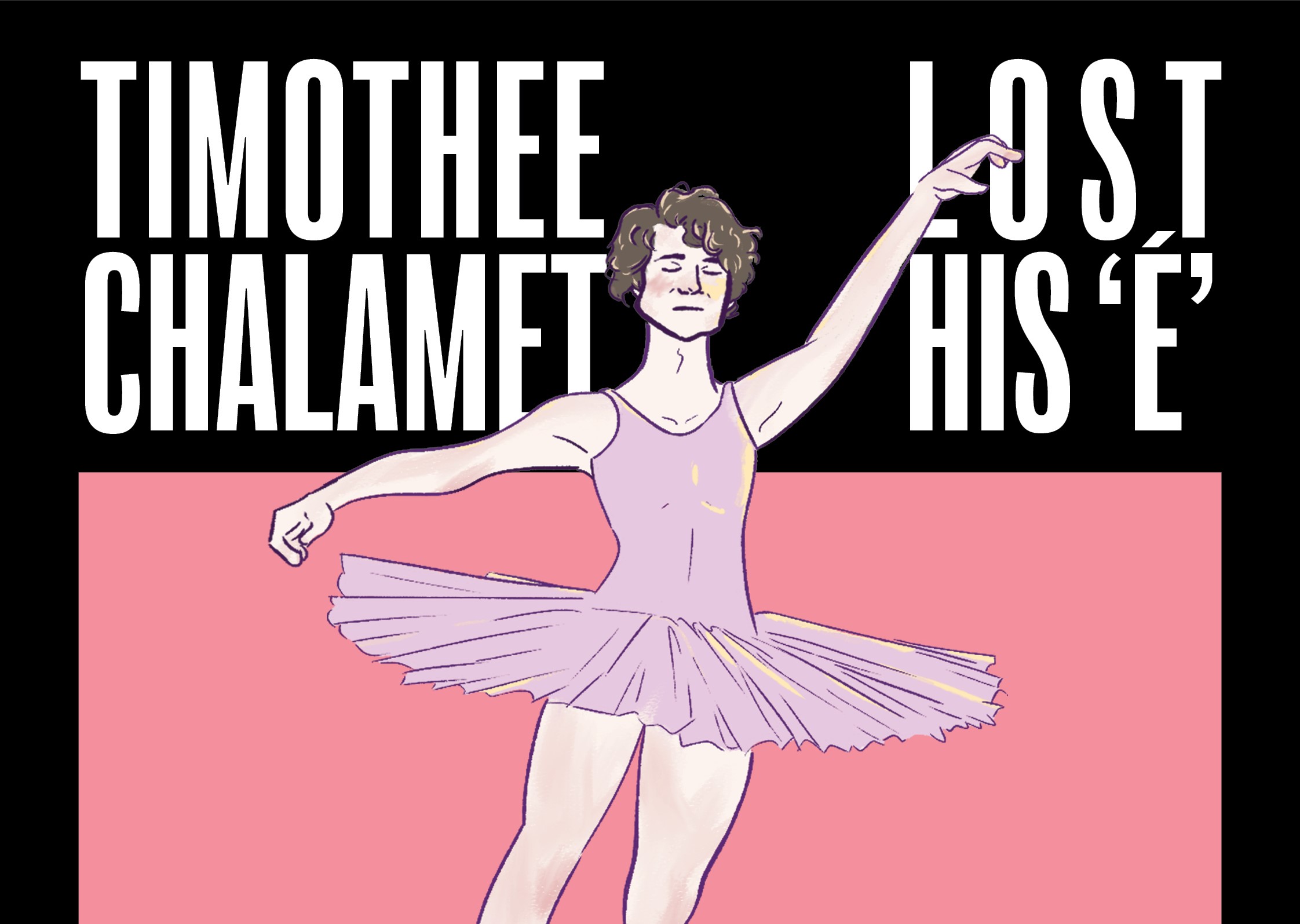

Overnight the once “white boy of every month” turned into a filler crush no one remembers past February, a scrawny second-string Seamus Lohery knockoff with a French name and zero wattage – torched his arty girl fanbase by shitting on ballet and opera in a CNN/Variety Town Hall with Matthew McConaughey. A man who has literally fucked a peach while thinking about a cannibal spent the chat inflating Interstellar as depth, Wonka as bravery, and Marty Supreme as destiny before dropping his genius take on actual art: centuries-old forms beneath him because his bald head can’t take the harsh lighting.
“I don’t want to be working in ballet or opera. Things where it’s like, ‘Hey, keep this thing alive, even though no one cares about this anymore.’”
That isn’t insight. That’s a Xbox-modding dropout deciding centuries of art are beneath him because the tights clash with his cheekbones. Cashing a Woody Allen cheque kills your right to call anything culturally dead. Posing as critique culture fails when the filmography lists predators HR would’ve benched a decade ago. He’s a pseudo-nerd who’d name-drop his Petronas if it got him laid, forever third-string Wonka behind Depp and an icon who’s no longer here to defend the title of greatest Wonka yet.
Opera remains widely popular today, even if its audience is changing shape rather than disappearing. Opera alone is a multibilliondollar global industry with audiences growing, not shrinking, over the next decade. Germany racks up hundreds of thousands of opera performances in recent seasons, with the US, Italy, the UK, Austria, and France stacking tens of thousands more. The Paris Opera pulls in around 800,000 people a year at roughly 94% capacity; that’s not “no one cares,” that’s “you don’t look up from your own reflection long enough to notice the foyer is full.” Digital platforms like OperaVision stream hundreds of productions from 93 companies to a worldwide audience; the art form left the dusty stereotype behind years ago while he was still learning how to pronounce his own last name in interviews.
Ballet is no different. Major companies like the Bolshoi Ballet, The Royal Ballet, and American Ballet Theatre are still filling houses and touring globally, building more actual community than a month of his promo content. The Nutcracker alone keeps countless studios solvent every year, from big city schools to tiny regional stages. Thousands of studios list ballet as their most enrolled style, prestigious academies turn away hordes of kids desperate to get in, and adults are crowding beginner classes for fitness and sanity. That is not an art form begging to be kept alive; that is an art form too busy working to notice a movie star sneering at it from a branded armchair.
He talks like a man who discovered the word “heritage” on a mood board and decided it meant everything that doesn’t give him a closeup is disposable. Knowing how to say your French surname and parroting your own star sign doesn’t make you an intellectual, it makes you the theatrekid cousin of a perfume ad. If I’m taking creative direction from anyone, it’s from people who are actually chasing Carmen, who want to understand Puccini, whose entry point to ballet is something other than “I’d sleep with the lead actress.” This isn’t the 80s, where kids hid their love of opera so they wouldn’t get called slurs at school; this is worse, because the dumbingdown is coming from someone cosplaying as a serious thinker while feeding the algorithm the easiest possible take.
That’s the danger here: pop culture being flattened by someone trying to appear pseudointellectual while talking to a dudebro audience primed to believe him. He has the reach to frame opera and ballet as hobbies for ghosts, to tell millions of people that the oldest collaborative art forms on the planet are just charity cases. When a man whose idea of risk is signing on for yet another Dune film starts ranking which arts deserve to live, what he’s really doing is shrinking the map for everyone who comes after him. He’s the thirdplace Wonka lecturing the factory workers about efficiency.
The man is logistically one casting announcement away from appearing in a Kardashian Christmas special, and we’re supposed to let him define intellectual integrity. He looks like the uneasy compromise between Morrissey’s worst instincts and a Coldplay deluxe edition, and somehow we’ve handed him the mic to speak for “serious culture.” That’s the problem: not that he’s shallow, but that he’s shallow with reach, packaging contempt as taste and selling it to people who might never walk into an opera house or ballet studio to find out he’s wrong.
Maybe it’s poetic, then, that Chalamet once played the boy who trembled at a touch – the Elio who could fall in love with a peach and a 16thcentury sculpture in the same breath. Back then, he was all instinct and élan – the é practically shimmered above his name. But somewhere between handing out chocolate bars in a top hat and philosophizing in press junkets like a man allergic to sincerity, the accent mark seems to have gone missing. The é packed its bags for Paris; the e stayed behind in Hollywood. Now, when he warns against art forms “no one cares about,” you can’t help but wonder if he’s talking about his own.
Tom Holland should be the white boy of every month instead – picture this: flips, charm, and actual sweat equity in a ballet studio, not just cheekbones and a French name cosplaying depth. He’d break hearts while pirouetting through Spidey stunts, leaving Chalamet to audition for the role of “guy who peaked in Call Me By Your Name.” Holland’s got the receipts in his calves; Chalamet’s got a Wonka wig and regrets. Not to mention, Holland loves ballet and is married to Zendaya, man has taste.