
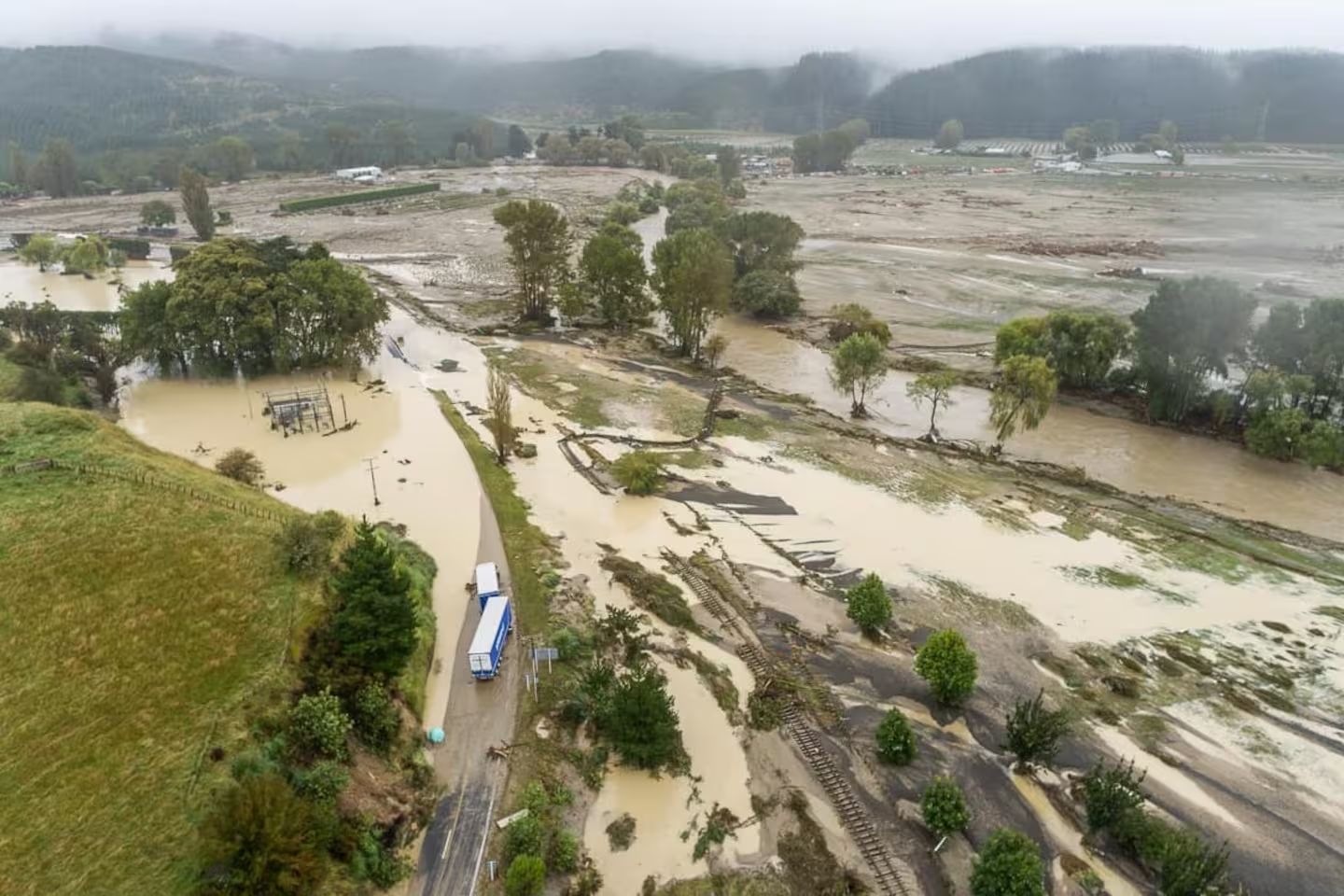

It is no surprise for many to hear of the various extreme weather events that have rocked Aotearoa over the past few months (additionally, the past couple of years). From rain, to slips, to temperature changes, every part of the country has recently been feeling the effects of a changing climate.
As of recently three years have been marked since Cyclone Gabrielle that devastated many parts of New Zealand, particularly the East coast. The cyclone was considered by the Prime minister at the time – Chris Hipkins – the worst storm to hit the country in the Twenty-First century. At the time, a national state of emergency was declared one of three in NZ history, with the previous two being the 2011 Christchurch Earthquake and the Covid-19 pandemic (1 News). Since then, a number of regional states of emergency related to weather events have been enacted. While these are nowhere near as rare as national ones, the increase of regional declarations has been noticeable. In 2025, eight total regional states of weather-related emergencies were declared. Over the first two months of 2026, that number has already been matched.
Heavy rain has led to numerous cases of flooding in various regions. Over Valentine’s weekend in February, three districts in the North Island declared a state of emergency as a result. After his Ute was surrounded by floodwaters, a man was found dead between Pirongia and Ōtorohanga on the evening of the 13th of February. Prior to this one man was also killed near Warkworth when he was swept away in his car from flooding.
Rain from another cyclone in January led to nine deaths in the Bay of Plenty because of landslides. One landslide at a Mount Maunganui holiday park claimed the lives of six people, while another in Pāpāmoa killed a grandmother and grandson.
As the Southern Hemisphere begins its descent into Autumn many parts of New Zealand are also facing sudden temperature drops and according to the New Zealand Herald ‘unpredictable weather’. On the 8th of March, South Island regions Fiordland and Southland were placed under a heavy rain watch, luckily only lasting until the evening. However, areas only a few regions away were also dealing with very hot weather. Blenheim and Christchurch were forecasted to reach 29C and 28C, with Ashburton not very far behind with a prediction of 27C. Back in 2022, NIWA was already claiming that the country was being hit by temperatures 5x more extreme than scientists had expected. The temperature changes have most certainly been following the same extreme patterns we’ve seen with New Zealand’s weather.
Essentially, what does this all mean? Scientists have acknowledged the effects of climate change around the globe for decades, but many still debate its legitimacy. Is the increasing pattern of extreme weather indeed us finally noticing the consequences of climate change? It is not entirely wrong to say that the weather on Earth has always produced moments of ups and downs, but many experts including NIWA have predicted a rather grim outlook on future weather as a result. Regardless of your stance, the most important thing New Zealanders can do right now is to be prepared for more extreme weather, and keep each other safe, remembering the lives we have already lost to these events.