
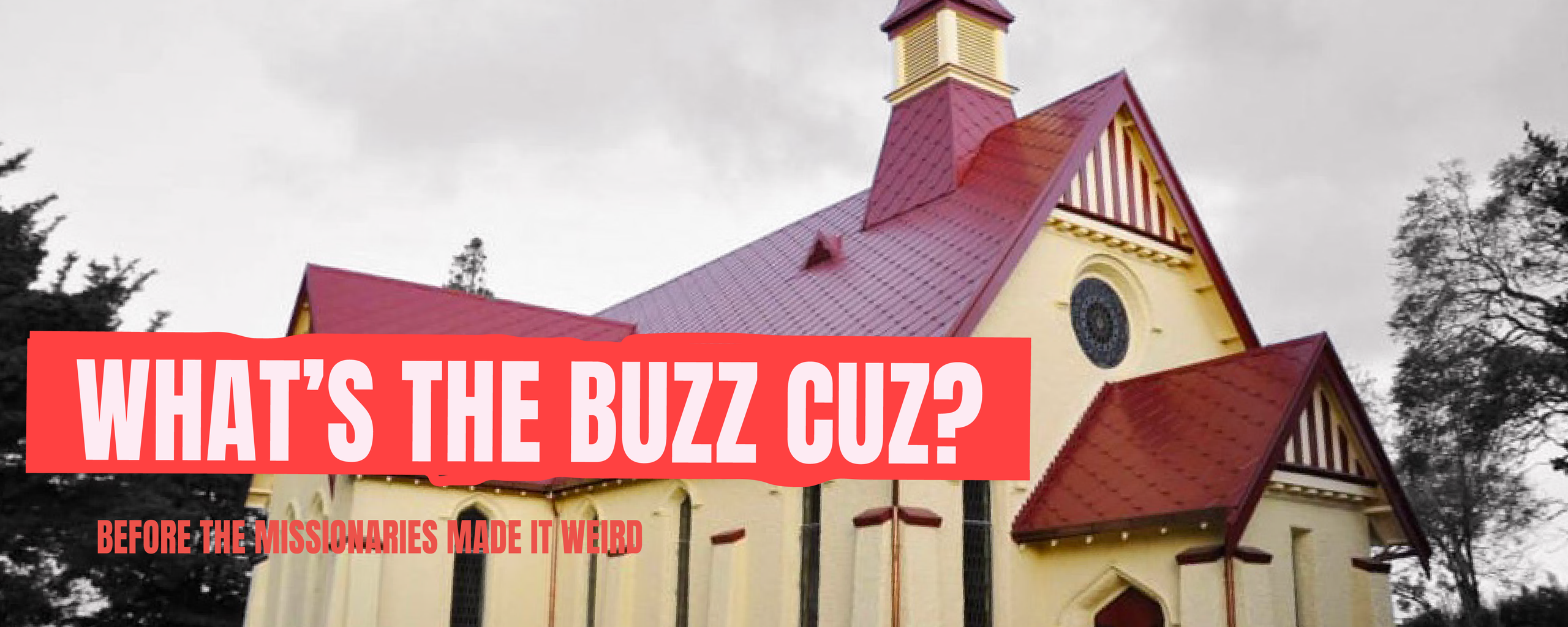

BEFORE THE MISSIONARIES MADE IT WEIRD
Let’s talk about sex. Yep, we’re going there. It’s actually kind of funny how surprised people can be when you tell them our tipuna were getting it on. As if sex arrived in Aotearoa post-colonisation or something.
Sex was already a pretty normal part of life for Māori. It was connected to whakapapa, relationships, fertility, pleasure, attraction and just, well… being human. It wasn’t automatically something that had to happen behind closed doors with everyone pretending they didn’t know what was going on. Sex and sexuality could be talked about, sung about and represented in whakairo and other forms of Māori art.
And before anyone gets carried away, no, I’m not saying Māori were just running around doing whatever they wanted with whoever they wanted. There were tikanga, expectations and consequences. Relationships weren’t all treated the same, and things like status, marriage and circumstances mattered. But that’s very different from saying sex itself was inherently shameful.
Then the missionaries made it weird.
Christian European ideas about sex increasingly brought different rules around what was considered acceptable, what was sinful, who you should have sex with, when you should have sex, and what parts of the body were apparently too offensive for everyone else to look at. Sex became increasingly tied to ideas of morality, marriage and reproduction, while the naked body and sexual expression were judged through a very different lens.
And honestly, our tipuna didn’t exactly respond by going, “Sweet as, guess we’ll stop having sex.” They kept getting it on, obviously. They just had to navigate a world where the rules around talking about and representing sexuality were changing.
You can actually see some of this tension in Māori art. In 1849, Rongowhakaata carvers were working on a church at Manutūkē when missionary William Williams objected to some of the imagery because he considered it inappropriate. Rather than throwing away the kōrero, our tipuna found another way to express it. The story was still there, just hidden in plain sight. The kōwhaiwhai carried the kōrero through patterns and symbols that might look “abstract” to someone who doesn’t know how to read Māori visual language, but still held meaning for those who did.
And it wasn’t just Rongowhakaata. Across Aotearoa, Māori carvings featuring sexual organs were altered or removed under missionary and colonial pressure. Some carved figures were literally modified by removing their penises. Imagine being so uncomfortable with someone else’s culture that you literally get the chisel out.
The missionaries made it weird.
But the sex itself? That didn’t exactly disappear.
Take Kahungunu, one of the largest and most widespread iwi in Aotearoa. The iwi traces its whakapapa back through Kahungunu and the generations that followed him. And as someone who happens to whakapapa to Kahungunu, I wouldn’t be here without my tipuna’s ability to get it on.
Jokes aside, that’s the part that gets lost when we talk about Māori sexuality through a colonial lens. Our tipuna had bodies. They had attraction. They had relationships. They had sex. They had children. They had songs and stories about desire, love, heartbreak and everything in between. Sex wasn’t something Māori needed to be introduced to. It was already woven through whakapapa and everyday life.
What changed was how sexuality was increasingly talked about, controlled, judged and represented. And I think some of that shame has lasted a lot longer than the missionaries themselves. You can still see it today. The awkwardness when sex gets brought up. The shame around our bodies. The feeling that talking openly about desire is somehow dirty or inappropriate. Sometimes those attitudes feel so normal that we forget to ask where they came from.
I’m not saying every boundary around sex is colonial, or that pre-colonial Māori sexuality was some perfect, consequence-free paradise. It wasn’t. There were tikanga, responsibilities, expectations and consequences.
But maybe we should question why shame has become such a big part of the conversation.
Because Christianity didn’t introduce sex to Māori.
Our tipuna already knew what was up.
The missionaries made it weird. And maybe, generations later, we’re still unlearning some of the weirdness.