

What happens when Māori research looks at healing through a different lens?
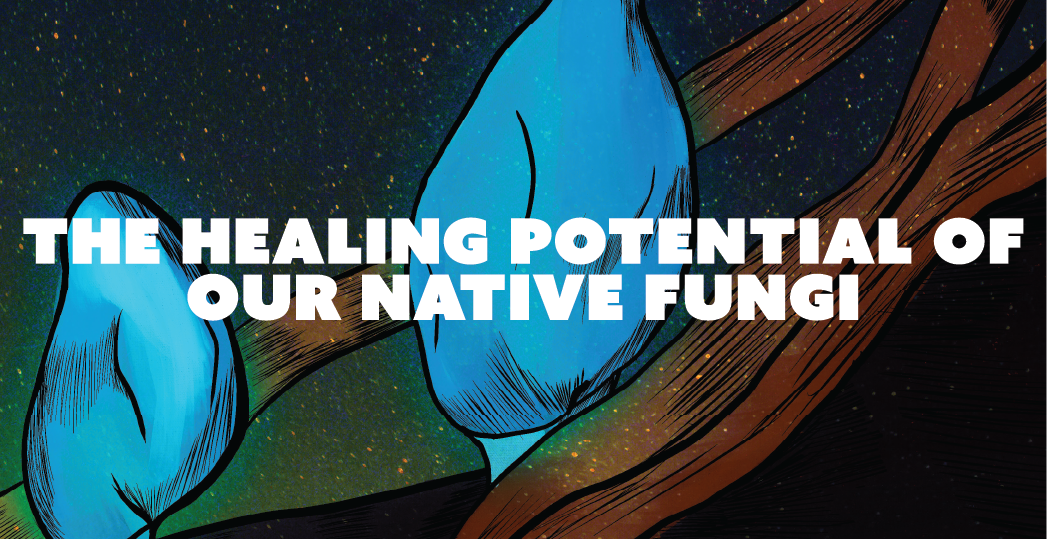
You might have looked at our $50 note and noticed the striking blue mushroom sitting beside Sir Āpirana Ngata. That mushroom is Entoloma hochstetteri, a native species found in Aotearoa.
It is more than just a cool design. It is a reminder of the biodiversity and taonga that exist right here in our own backyard. Among those taonga are native fungi, and one Māori-led kaupapa is asking an interesting question: could some of these fungi have a role in healing?
Tū Wairua, a kaupapa established at Rangiwaho Marae in 2023, is exploring the potential of fungi and psychedelic medicines through a Māori lens. The kaupapa grew from a concern familiar to many whānau and marae: the intergenerational impacts of addiction, trauma and mental distress.
But before asking what these taonga might be able to do, there is another question: what did our tipuna already know about them?
When researchers looked for evidence of psilocybin-containing fungi being used as rongoā Māori, there was very little recorded oral or written knowledge to draw from.
For Tū Wairua, that silence is significant. It does not necessarily mean the knowledge never existed. Māori systems of knowledge were disrupted through colonisation, including through the suppression of tohunga and traditional healing practices. The Tohunga Suppression Act 1907 criminalised tohunga practices and contributed to the loss and silencing of mātauranga that had been passed down through generations.
In this case, the absence of records becomes part of the story.
Rather than having a clear body of mātauranga to return to, researchers are having to ask what may have been lost, what can still be recovered and how contemporary science can be approached without separating these taonga from their cultural context.
Today, Tū Wairua is working at the intersection of mātauranga Māori and scientific research.
Rangiwaho has identified nine native fungi within the Whare Atua whānau, with the kaupapa currently working with one of its teina rather than using Whare Atua itself. Early research has instead involved an extract of a psilocybin-containing mushroom imported from Canada.
For the people behind Tū Wairua, the focus is not simply on what a substance does to the brain. Healing is understood as something involving the tinana, hinengaro and wairua.
The experience has been described as a journey: a chance to confront trauma, recognise patterns and potentially see different pathways forward. But the substance itself is not viewed as the healer. The role of the kaitiaki and the surrounding kaupapa is considered just as important.
That is why Māori leadership matters.
The initial trial at Rangiwaho involved 12 healthy participants, with people trained as kaitiaki to support them through the experience. The kaupapa argues that introducing psychedelic substances into mainstream healthcare without the cultural context, preparation and support surrounding them could create risks.
This is particularly important when the people seeking help may be dealing with addiction, depression, PTSD or intergenerational trauma.
Tū Wairua is still at the beginning of its journey. The native fungi themselves are not yet being cultivated for these trials, and much remains to be researched.
But perhaps that is what makes the kaupapa so significant.
This is not simply about finding the next pharmaceutical treatment. It is also about reconnecting with taonga that may have been separated from us through the loss of mātauranga, while asking what healing could look like when Māori frameworks, tikanga and wairua are part of the conversation from the beginning.
Our native fungi have been growing here long before modern medicine arrived. Now, Māori researchers are beginning to ask what we might have forgotten, what we can learn again, and what these taonga might still have to teach us.