

The Finnish line is a column series by Martta Tikka, an exchange student from Finland. In this column series, they talk about their experiences about Aotearoa, its people and events.
After a careful consideration I have come to the conclusion that Finnish people don’t feed each other nearly as often as they should. During these past weeks I’ve learnt just how easy it is to get people to show up if you promise you’re going to offer them food, and how I instantly form a positive opinion about anyone who gives me a grilled cheese sandwitch. In other words, it has been fun to notice how normalised hospitality is here.
Especially in the beginning of the trimester, stands of free food tended to appear to the campus rapidly. Or, as I’d say in Finnish, “kuin sieniä sateella” (like mushrooms when it’s raining). In Finland, casual offering of food is not that common. Candy is handed out in some big events, and some political parties might give people sausages while campaigning. That, however, is not nearly in the same level as the food-offering-hospitality I have faced here.
It seems to me that New Zealanders just love handing out free food. From a Finnish perspective this feels like a luxury, it feels like something I haven’t quite deserved. Finnish people tend to have the attitude of “ei tartte mua varten keittää” (“don’t brew that coffee just for me”). It means we only accept offerings if they are forced upon us. No one gets to service us, unless they really badly want to do so. We don’t expect people to do anything for us, or at the very least we want them to think so. This can be applied to other acts of kindness as well: for example, compliments from strangers are so rare in Finland that they always startle me.
Let’s think Finnishly for a moment and think that nice gestures happens for a reason. Feeding people can be seen as a strategy for giving a positive impression but also spreading knowledge. Food is a small, easily manageable bit of culture that a person can easily introduce to another. Especially, this has become familiar to me in people’s habit of recommending pineapple chunks to me. I was hesitant at first, but did end up liking them. I didn’t think I would, but here we are.
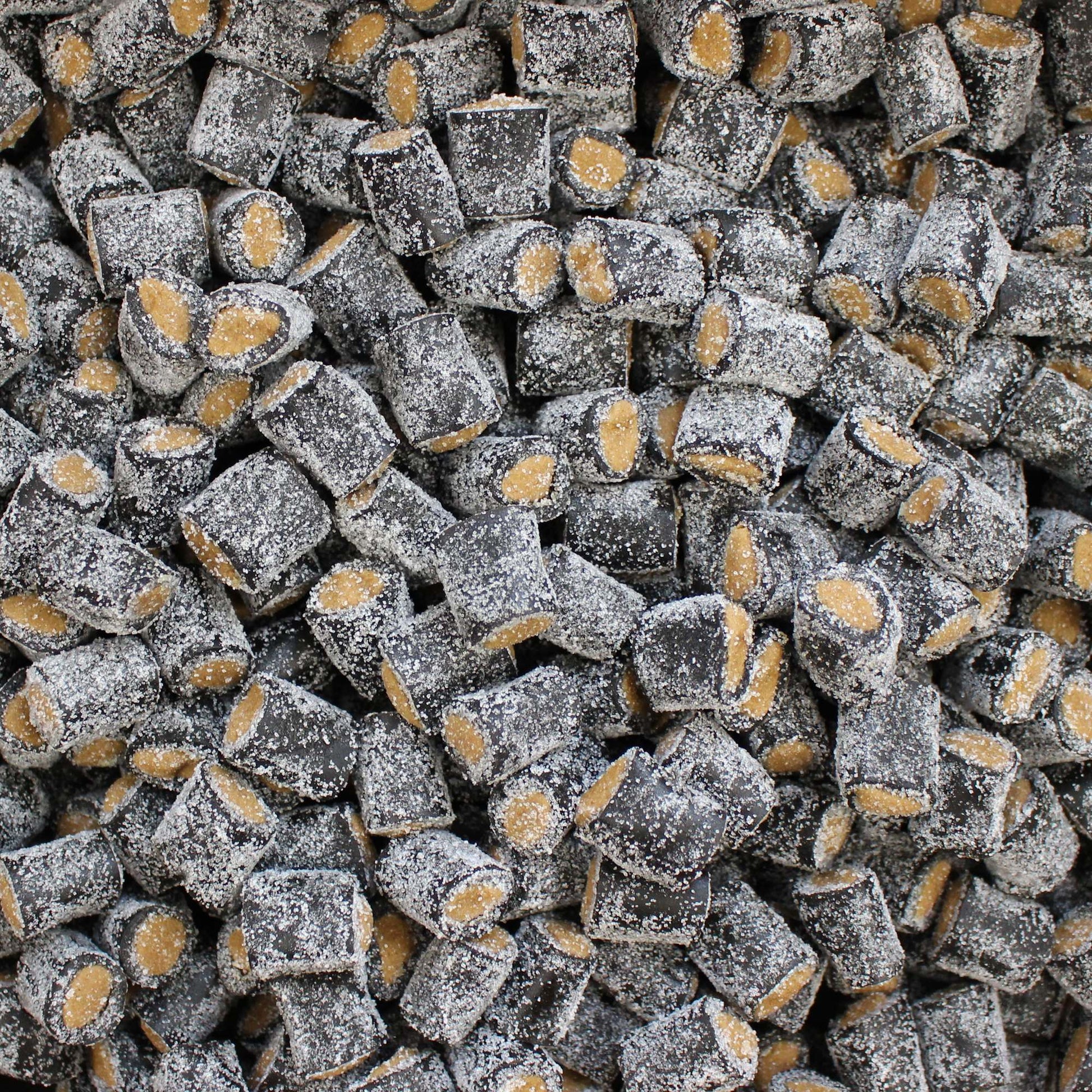
Every country probably has their own “national candy”, something that they take credit for inventing, something that they always want outsiders to eat. I was surprised New Zealand’s one was this nice, because us Finnish people use our “national candy” to borderline bullying. We have this thing called salmiakki. It is made by combining two lethal chemicals that neutralise each other when combined. Salmiakki is the kind of thing one has to get used to, so it’s common for us to play this as a practical joke: after an innocent “would you like to have a candy”, we just wait and watch as the other person frowns and asks why this lolly tastes like medicine. That’s our version of humorous hospitality.
This version of a-prankster-kind-of-culture-introducing tends to haunt my mind every time I’m cooking a meal for my Kiwi flatmates. Just last week, I was wondering if they’d believe my macaroni-and-eggs-and-minced-meat block with hardly any spice wasn’t just some weird prank. “Makaronilaatikko” or, in English, “macaroni box” is a legitimate food in Finland, but it’s the kind of food one could freeze for months and notice little difference compared to a fresh portion. Compared to all the delicious and complicated-looking meals my flatmates have made, some Finnish foods have started to feel rather bland. Fortunately, soy sauce has been able to save me from the biggest embarrasments when cooking for others.
It’s important, however, to keep in mind that analysing can spoil wonder. I don’t need to pick apart every act of kindness. I don’t need to evaluate different food cultures on a scale from one to ten.
(But New Zealand would be a strong 8.)