
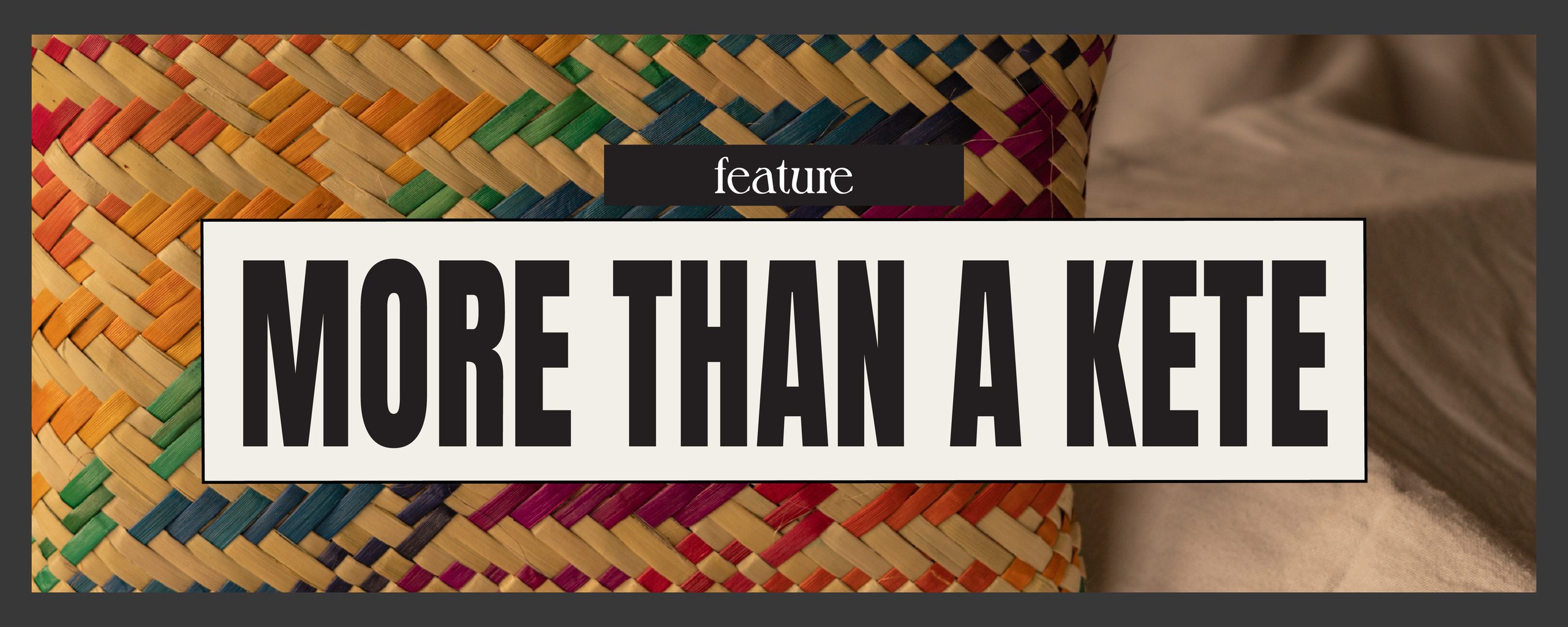

The stories, skill and knowledge woven into raranga
Raranga has always been practical. Our tīpuna used what was around them to make the things they needed. Harakeke could become kete for carrying and storing things, muka could be used for clothing and cordage, and raranga was used to make whāriki and all kinds of everyday items. So when we look at a kete today, it can be easy to just see a bag. But there is a lot more going on in one than you might think.
It starts with the harakeke itself. Not every type of harakeke is suited to every kind of raranga. Some varieties are better for kete whakairo, others for muka, and others for whāriki. Knowing which harakeke to use, where to get it from and how to prepare it properly is part of being a kairaranga. You cannot just pick up any plant and expect it to become a good kete.
The preparation takes time too. The harakeke needs to be selected and processed carefully before it can be woven. The fibre needs to be strong enough, flexible enough and prepared in the right way for what it is going to become. By the time the first strip is woven, there is already a whole lot of work behind it that you probably would not think about when looking at the finished piece.
Then comes the actual weaving. A good kete takes patience. The tension needs to be right, the strips need to sit where they are meant to and the pattern has to be kept in mind as the piece grows. It is one of those crafts where you can look at the finished product and think, “That looks simple enough,” until you actually try it.
And no two kete are the same.
Even when two people use the same technique or a similar pattern, the finished pieces will still have their own differences. The way someone weaves, the harakeke they choose, the colours they bring in, the combinations of patterns and the decisions they make along the way all become part of that particular piece.
If you have a kete, you know your piece is the only version of it.
That is what makes it more than something you bought to carry your stuff. It is a one-off. Someone chose the materials, prepared them, worked through the pattern and made all the decisions that eventually became that particular kete. You cannot just go and buy another one exactly the same.
Patterns are a big part of that. To someone unfamiliar with raranga, a pattern might just look like a nice design. But patterns can carry meaning and connect a piece to people, places, stories and ideas. When different patterns are brought together, they can create something that is specific to the person making it or the story they want to tell.
Colour can add another layer. Māori weavers have long used natural dyes to create different colours, but contemporary kairaranga also have access to a much wider range of dyes and materials. That opens up room for bright colours and combinations that you might not expect to see in traditional raranga. I can tell you now, I don’t think my tīpuna were rocking around with a bright pink kete.
But that is the point. Raranga does not have to look exactly the same forever for the knowledge behind it to remain. Kairaranga today can take techniques that have been passed down and use them to create something that reflects their own lives, tastes and ideas.
That is what makes it a living art form. It can still be practical while also being creative and deeply personal. A kete can be made to carry things, but it can also carry a story. It can reflect a place, a whānau, a memory or simply the creativity of the person who made it.
And because a well-made kete can last for years, that story does not necessarily end when the weaving is finished. It can be used, looked after, gifted, handed down and become part of a whānau’s own history. The physical piece can outlive the person who made it, carrying something of them with it.
Eventually, though, even a kete has its time. When it has been used and cared for, for as long as it can be, it can return to the whenua and biodegrade. It begins with harakeke growing from the whenua, becomes something made and used by people, and eventually returns to the earth.
There is something pretty fitting about that whole cycle.
From the harakeke itself, to the preparation, the weaving, the patterns, the colours and the finished piece, there is a lot happening in raranga that you cannot see at first glance. It takes years to learn, but it also leaves room for each kairaranga to bring something of themselves into what they make.
So the next time you see a kete, actually look at it.
Look at the pattern. Look at the colour. Look at the way the harakeke has been woven together. Think about where the material came from, who made it and all the decisions that went into making that one particular piece.
Because a kete might carry your stuff, but it can carry a whole lot more than that.
And if you have one, you have something no one else has.
PATTERNS –
Niho taniwha represents kaitiakitanga and kōrero tuku iho, reflecting our responsibility to protect and carry forward the knowledge passed down through generations.
Pātiki represents manaakitanga, reflecting the importance of caring for, welcoming and providing for others.
Raukumara represents manaakitanga, reflecting values of care, generosity and looking after those around us.
Kōeaea represents the migration of īnanga (whitebait) and the pathways they travel towards the sea, reflecting movement, connection and journey.
Poutama represents levels of attainment and the pursuit of knowledge, reflecting growth and the journey of learning.
Papakirango, traditionally a fly swat, represents spiritual and physical protection, used to ward off harmful influences and protect wellbeing.