

Who decided Māori fashion was only for special occasions?
There is this idea that Māori clothing and adornment belong in a particular category: something traditional, something formal, something you wear when the occasion calls for it. But Māori fashion has never really been that simple. We make things to wear. So why should they only come out on certain days?
A Māori design can be part of an everyday outfit without the whole thing needing to look “traditional”. A patterned skirt can be worn with a plain top and sneakers. A heru can become part of a hairstyle for a day on campus. Pounamu earrings can go with the same outfit you would normally wear anywhere else. A kete can be carried like any other bag. None of these things need a special event to justify wearing them.
Then there are the pieces that are a little harder to miss.
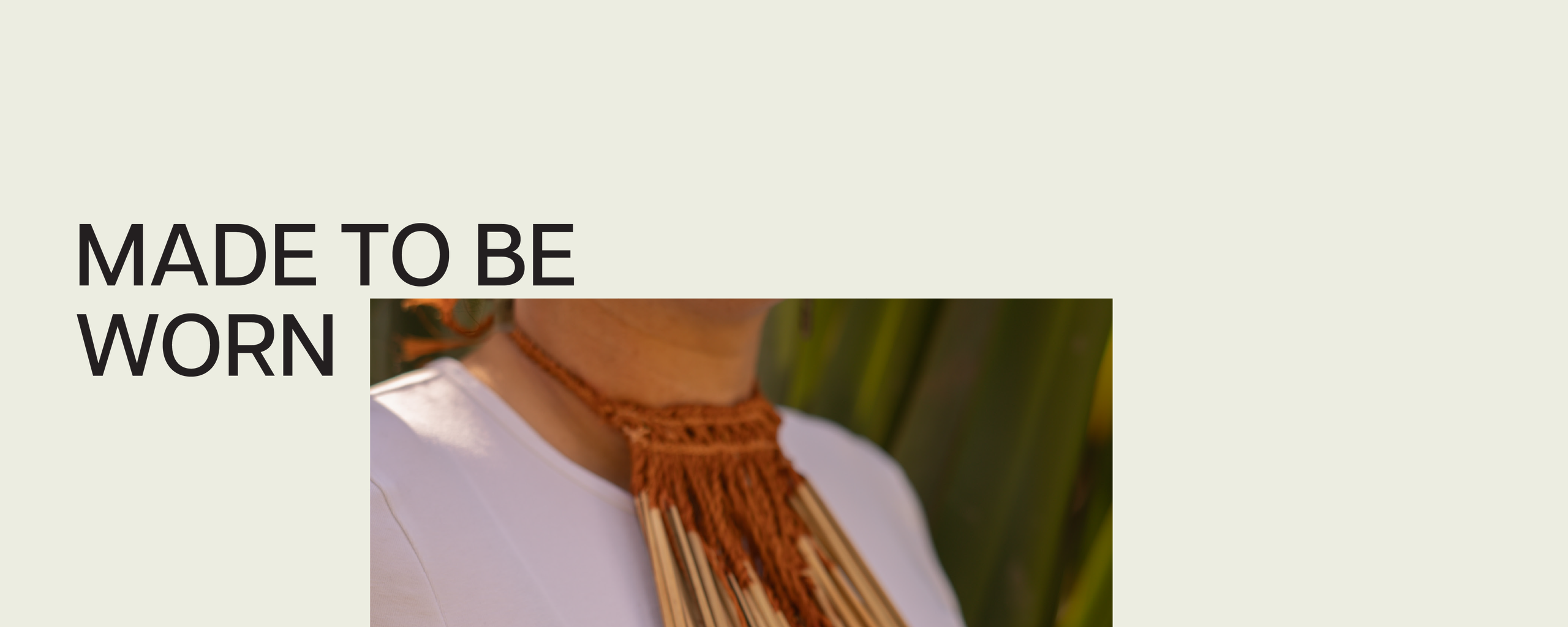
A muka tāniko neckpiece is a statement piece. It has the detail and presence to completely take over an outfit, but that does not mean it has to be saved for a formal occasion. With a simple outfit, it can work just as well as any other statement accessory. The same goes for other pieces that might traditionally be thought of as “dress wear”. Sometimes the best way to wear them is simply to wear them.
That is what is interesting about Māori fashion now; It is not about putting traditional design into a box and keeping it there. It is about Māori design being part of fashion as we actually wear it.
The lines between everyday and formal are changing. Clothes can be dressed up or down. Accessories can be styled differently depending on the person wearing them. Traditional materials can sit alongside modern silhouettes.
And this is not about trying to look more Māori, either. Wearing Māori design is not a performance of identity. You do not need to wear a certain pattern, a certain piece of jewellery or a particular style to prove anything about yourself. Fashion is personal. Sometimes you wear something because it connects you to home. Sometimes because it was made by someone you know. Sometimes because you like how it looks. Sometimes it is all of those things at once. That is the freedom of Māori fashion. It does not have to look one particular way to count.
Māori fashion is not waiting for a special occasion. It is already being worn to class, to work, to events, to the shops, to dinner and everywhere in between. Because it was made to be worn. Not just on the days when someone tells us it is appropriate.
So, what does Māori fashion look like in your everyday?