

Fairies have shrunk over the years both in size and scope. It was only from the 14th century and onwards that the term began to narrow in definition. Before that ‘fairie’ was used to describe a collection of different creatures such as gnomes, sprites, dryads, banshees and all manner of magic that dwelt on the edges of human knowledge. The artistic depictions of fairies as they are now started to become more popular in illustrations like Tinkerbell (now an iconic Disney figure), Cecily Marie Barker’s flower fairies (cherubic, graceful personifications of nature) and Sir Arthur Conan Doyle’s (who firmly believed in the existence of fairie).
Eastern Europe specifically has a fraught relationship with many of its mythological creatures, endemic or otherwise. The majority of the creatures that appear in folk-tales pose a direct threat to human safety, whereas other cultural traditions often reflect more diverse conceptions of the mythological creature. In Asia, for example, there is a rather dualistic perspective of good and evil, many myths underpinned with a sense of moral ambiguity and the darker aspects of their monsters are often symbolic of consequence. European folk tradition simply populates its forests with fear. By filling the woods with all manner of monsters, they center human existence as fundamentally pure, with the forest as a liminal space in which corruption and evil fester on the outskirts of society. Likely, this is a trend brought about by both Greek Antiquity and Christian influence. There is a unique shape to Greek tragedies (exemplified in reproductions and depictions of Medusa) that supports its continuing influence on culture, with both metaphysical and moral aspects to the concept of evil. Leo Tolstoy tells us that “all great literature is one of two stories; a man goes on a journey or a stranger comes to town.” In both of these instances, the ‘unknown’ is at the centre of the story. The danger is represented at the edge of the familiar, just as the monster in art is often a metaphor.
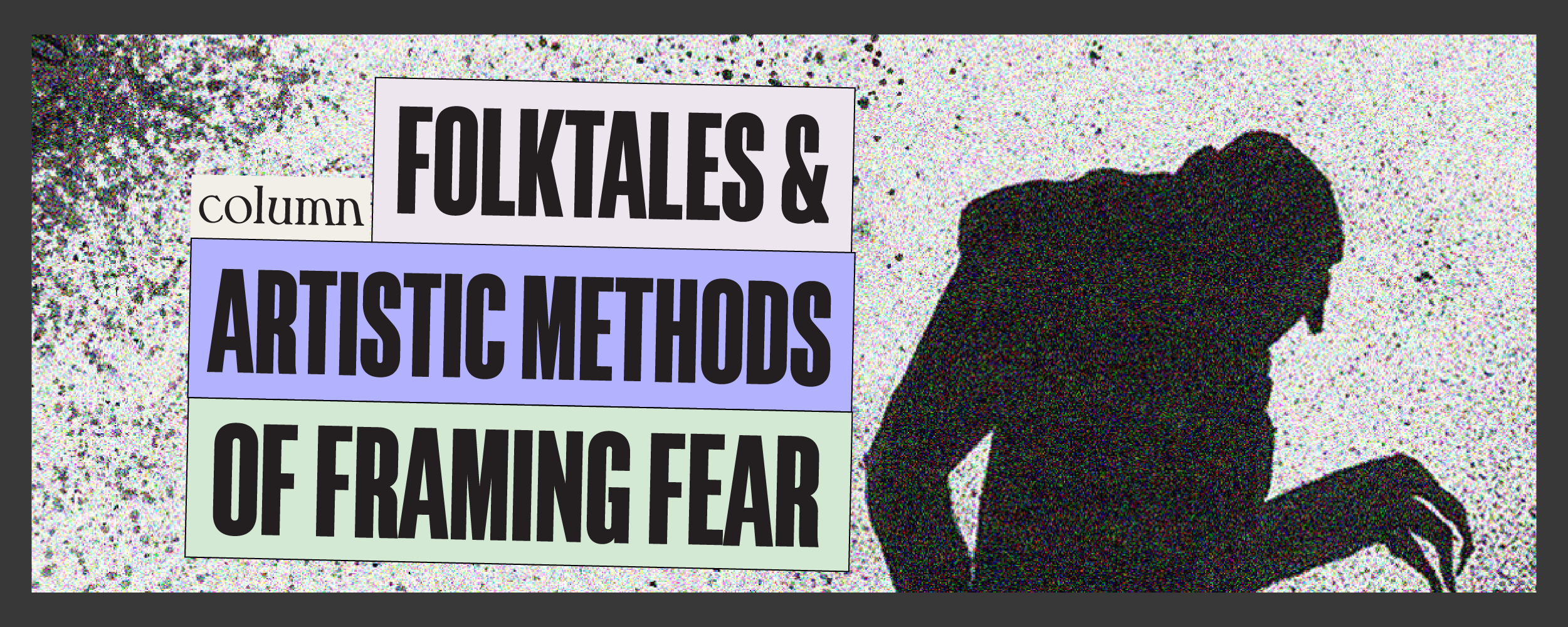
Simply put, often a monster (or the interpretation of a monster) is representative of fear. This is especially evident with depictions from Romanticism and Symbolism (notably, Francisco Goya and Edvard Munch) and common tropes found in fairytales and folklore. The Witch poses a threat to the domestic aspects of life, therefore she is often depicted with a broom, as an old woman living in the woods, with her powers revolving around poisoning foods and harming children. Vampires are commonly thought to reflect fears of death and disease, the werewolf is a danger that lurks in the night, under the full moon in a dangerous forest. Sirens and willow”o”wisps lure travelers to their watery deaths. Fairies are historically trickster beings. Changelings took the place of kidnapped human children and encounters with the Fae typically lead to madness, such as joining a revel or eating their food.
Pre-Victorian imaginations often tied the creatures of folklore to ‘old’ places; forests, waterways or stone structures. It wasn’t until more recently that we began to conceptualise mythical creatures as having innate domestic qualities- the according cultural change and those newer depictions channeled into urban and high fantasy. In many instances, art is a method of exploring the relationship that we as people have with fear. Artistic depictions of nightmares or envisioning the physical appearance of a natural phenomenon, giving a face to the creatures that populate liminal spaces. It brings natural concepts into an acceptable form for consumption, on the page or canvas. Monsters are often saying something about how we experience the world.