
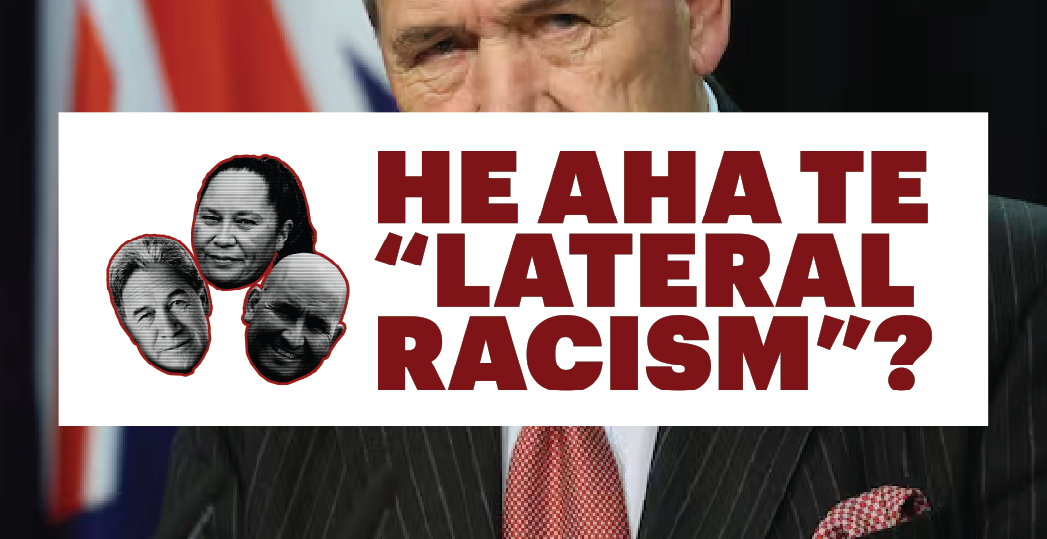

Lateral racism is a term you might hear thrown around, but what does it actually mean?
Put simply, lateral racism is racism that happens between people from marginalised communities, rather than from the dominant group towards them. For Māori, that can mean racism coming from other Māori. That might sound strange at first. Surely if we are all Māori, how can one Māori person be racist towards another?
Well, being Māori does not automatically remove the racist ideas we have grown up around.
Colonisation changed more than our land, laws and language. It also changed the way Māori were taught to see ourselves. Over generations, ideas about what a “real” Māori looks like, sounds like or acts like can become internalised and then repeated within our own communities. You see this when Māori are told they are “not Māori enough” because they do not speak te reo, or when someone gets mocked for speaking te reo because they are “trying too hard”. It can be questioning someone’s whakapapa, making comments about moko, or judging someone for practising tikanga differently.
It can show up in politics too.
As of today, there are more Māori MPs in Parliament than ever before, with 32 Māori MPs elected in 2023. More Māori in Parliament is a good thing for representation, but it does not mean Māori politics suddenly becomes free from racism.
Think about the reaction to Te Pāti Māori MPs, particularly when Māori identity itself becomes the target of political criticism. In 2025, Winston Peters referred to Te Pāti Māori co-leader Rawiri Waititi’s mataora as “scribbles” during a parliamentary debate. The comment was later withdrawn and Peters apologised after being directed to do so by the Speaker.
The issue here is not simply that two Māori politicians disagreed. Māori disagree with each other all the time. We should. Political debate, different views on tikanga, and arguments about what is best for our communities are not automatically lateral racism. The question is what sits underneath the criticism.
When Māori identity, culture, language or appearance is treated as something embarrassing, inferior, fake or less legitimate, that is where lateral racism can come in.
And that is probably why the term matters. Because racism does not always come from someone who looks completely different from us. Sometimes it comes from someone sitting at the same table.
That does not mean we cannot challenge each other. It means we should be able to do it without reproducing the same ideas that have been used against Māori for generations. More Māori in Parliament is worth celebrating. But representation alone does not undo the attitudes colonisation left behind. That work is ours too.