
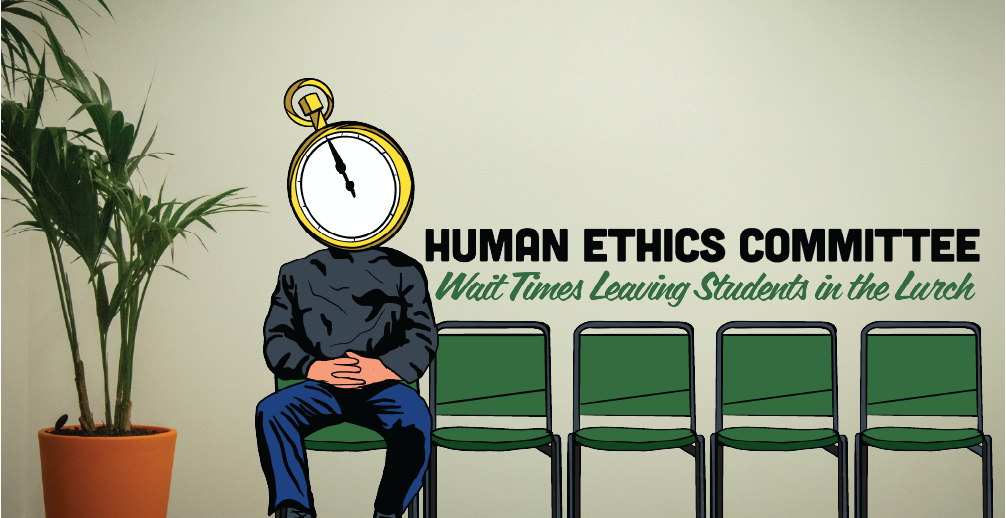

Wait times for the Human Ethics committee in Health research have left much to be desired, affecting the work of many Honours and Post-graduate students.
One student stated that in 2025, they submitted their research proposal to the ALPSS ethics committee in April, intending to start research in May. While the student was required to edit some details, it was not necessary to resubmit, and the ethics committee’s response allowed them to commence research. It also took 1 to 2 weeks maximum for the committee to respond.
This year, the student submitted around the same time to the Human Ethics Committee for Health research with the intention to also start research in May. The committee required them to resubmit the whole document, and the student therefore had to wait a month to hear back, as the committee meets monthly. Prior to this, the committee’s response to the initial proposal was delayed. The response meant the student had missed the next month’s May deadline for submissions, and they had to wait another month to submit and wait to hear back, delaying their research.
On the 23rd June which was the allocated meeting day for the committee, the student received an email stating they ‘couldn’t meet quorum’. The meeting was delayed for a week to the 30th, and they were again told that quorum was not met. The committee decided to delay the meeting until the end of July.
The Ethics committee acknowledged the frustration and offered to do some things prior to the next meeting, with feedback given approximately 2 and a half weeks later. The student responded to the feedback, and as of the 9th of August are yet to receive a response.
“There has been no transparency about how long things were going to take and no plan about how they would address the lack of meeting quorum and ensure quorum would be met the next time,” stated the student, “I am sitting here, it is now the start of August and I still have not had ethics approval to start research.”
They stated that while they were fortunate to not be completing their postgraduate study until the end of next year, others that are completing one-year degrees only have until February. Honours students’projects are reportedly due in October. If those students are facing similar delays, that leaves a limited number of months to complete their research before the deadline.
“I understand that the ethics board is in place to make sure everything is ethical, which is great, and I support that, but this is not acceptable.
It’s making me really demoralized. I have completed everything I can do before I start researching. […] I have some bits and pieces I can work on but every time I go to work on it, I feel so stuck and demoralized because of the wait times. It makes me feel really disillusioned with everything.
I was really passionate about my subject and what I want to study and what I was researching. I think it’s really important […] but I am stuck in waiting mode not knowing when things will change and I can start doing my research.”
They also stated the guidelines felt like they lacked clarity, providing little information on what you are supposed to do and where to go.
On the 4th of June, Gary Wilson, the Deputy Vice-Chancellor of Research, emailed staff acknowledging the slow process and the need to change the system. Nexus was told this email was only sent to staff and not students, with students only receiving emails about the committee not meeting quorum. This change was also surrounding a new portal and management system, something the student believes does not fix the issue of long wait times.
The student Nexus spoke to expressed concern for students and their own wellbeing, highlighting both time and money issues. Students may have to spend extra money and feel like both time and finance have been wasted as they cannot do their research.
Along with the approval of waiting proposals, they would like to see more transparency in the future from the ethics committee and a defined plan on what steps will be taken to resolve these issues. Communication is needed around when those that have been affected by the slow wait times can expect to hear back, and future communication on expectations would also be appreciated.
The student also wishes to express that those facing the same issues should reach out to one another and help encourage change.