
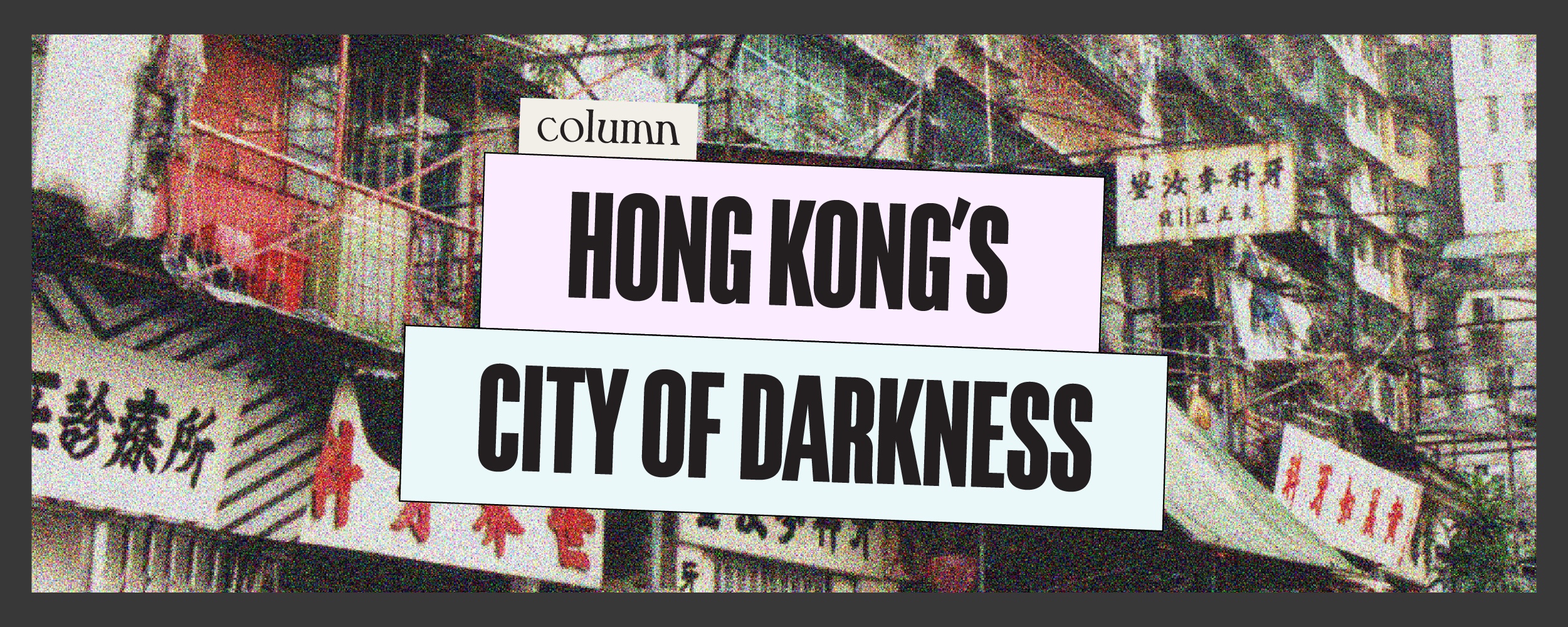

Picture this. The year is 1985, and you are flying into Hong Kong’s old Kai Tak Airport. As you approach the runway, you look out of your window, and what appears is a giant megastructure that is made up of hundreds of buildings crammed together like sardines in a can. What’s even more puzzling is that it exists entirely in a mere 2.6 hectares of land, and what surrounds it are spacious apartment blocks and open land. What you’ve just seen is the Kowloon Walled City (KWC), known to locals as Hak Nam, or the City of Darkness.
Originally a Chinese military fortress, the KWC was the result of unusual political circumstances. The area was left out of the original treaty agreement between Britain and China ceding Hong Kong to the British, and the result was a territory whose governance was uncertain, and its people left to their own devices. Following World War 2, Hong Kong saw a flood of returning residents and refugees, causing the city’s post-war population to explode. Squatter settlements became the norm, and at its prime, the KWC fostered a population of well over 30,000 people, making it perhaps the most densely populated place on the planet.
The absence of rules and regulations governing the KWC meant that construction was not limited by any building codes or standards. While other squatter settlements in Hong Kongwere barred from building higher than four stories, buildings in the KWC were sometimes up to 14 stories. As the population of the KWC continued to increase, any remaining space was filled. Empty alleys were replaced with more structures, and existing elements such as staircases from existing buildings were co-opted to be used with newer buildings. New premises were squeezed in wherever possible, existing walls were demolished to expand rooms and spaces, and the result was a unified megastructure made up of 350 buildings.
A good way to imagine the KWC is as a maze or a labyrinth. Whereas traditional buildings are accessible from ground level, buildings in the KWC were accessible from other buildings, through passages, or from rooftops. This complex network of passages and buildings had created in the KWC a decentralised society, where residential neighbourhoods blended in with industries, businesses, shops, etc. The dense population and limited government oversight also meant that illegal businesses and activities thrived. The KWC was infamous for its brothels, gambling houses, and venues where you could purchase a whole array of illegal contraband, like drugs, dog meat, medication, etc.
However, despite its flourishing underground economy, many former residents of the KWC remember it fondly. Many describe a tight-knit and close community, where residents played a big role in the management of the KWC. There was a council of elders, known as the Kai Fong, which acted as intermediaries between residents and authorities, while also settling disputes within the KWC and allocating ownership of different properties. When the Hong Kong government announced its plans to destroy the KWC, many residents were furious and zealously protested the planned destruction of their home. However, in 1993, the KWC was finally demolished.
When you visit the site of the KWC today, there is little to suggest that it was ever there. However, it continues to live on in the cultural memory of Hong Kong. The KWC has attracted the attention of architects and designers, many of whom are attracted to it as an example of anarchic urbanism, and the city has taken on a life of its own in pop culture and media alike. Anime movies like Ghost in the Shell were partly inspired by the KWC, and it has become the backdrop for countless video games and manga. While the KWC no longer exists, it has become an inseparable part of Hong Kong’s heritage that will continue to both puzzle and fascinate generations to come.