
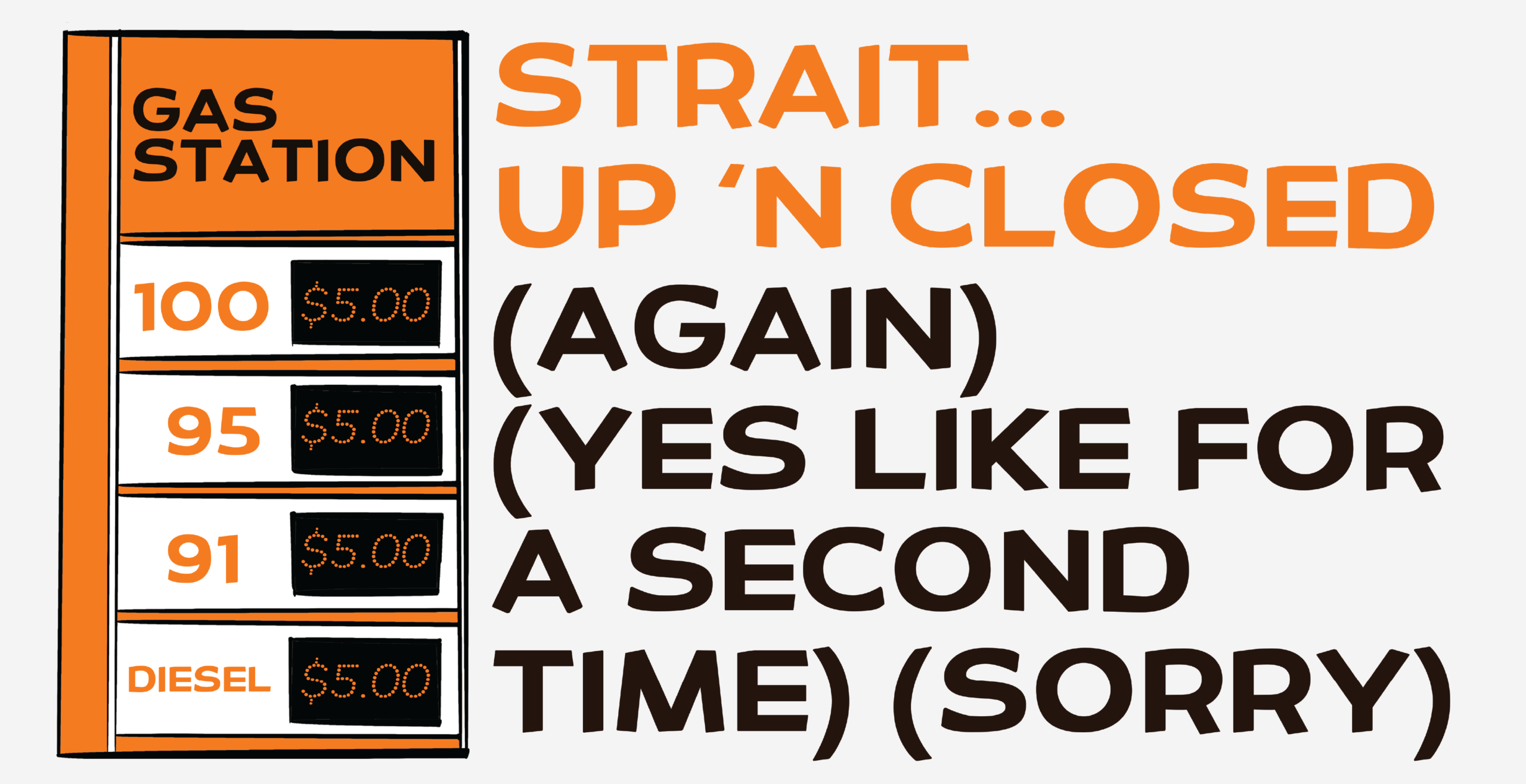

Long queues for slightly promising gas prices might be looming beyond the windscreen once again. After tense ceasefire negotiations with Iran on June 17th, the United States saw some gaudy jackboot phonk edits get thrown up by official White House accounts, there was a period of snails pace, closely monitored travel through the strait of Hormuz.
Before any of us regular folk down at the bottom of the earth got to feel the benefits of any of that, though, Israel struck Iran, prompting retaliatory strikes from Iran, prompting Operation Epic Fury to resume as the U.S. struck Iranian coastal targets, valiantly defending its multi-billion-dollar Imperialist investment in the region, errrrrrrr… I mean to deter the ‘Islamic Republic of Japan’ from striking anymore US ships after a civilian craft was struck by a missile for operating in an unauthorized route of the strait.
The prolonged closure of the strait of Hormuz “Eclipses all previous oil crises, including the 1979 Oil Shock during the Iranian revolution,” Waikato Professor of history Chip Van Dyk tells me. He says that it has the “potential to create global economic unrest.”
That 70’s oil shock inspired the Mad Max franchise, so unless you’re getting into your leather-daddy phase, it seems like we’re heading for dire straits – or, well, not straits, because it seems like those keep getting closed.
Expecting further strain on fuel prices: Optimistically, we could see an increase in money delivered to the 157,000-ish families that qualified for National’s fuel support announced in March of this year, but official IRD numbers show the amount of kiwi families receiving the relief does not match the language and promises made by National during the initial response. So, is there any chance Nicola Willis gives any more of us a – as she would say – winning lottery ticket? You shouldn’t hold your breath, dear reader. But you should hold your wallet, and you should hold onto any mates that are doing it rough. Carpool, split gas cost, etc.