
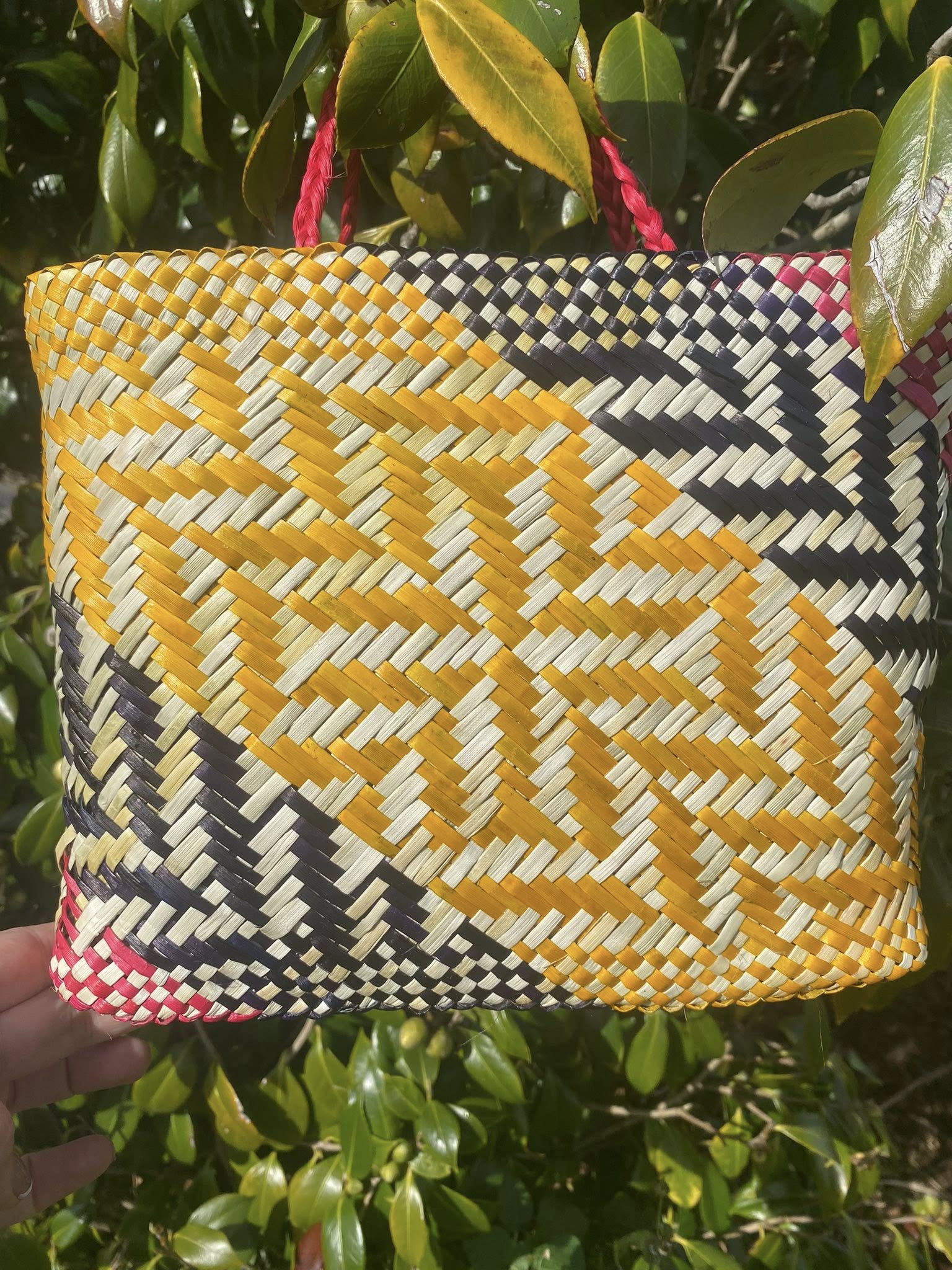

Raranga is both art and storytelling. This interview captures a weaver’s insights into her creative journey, from her first kete to the kaupapa that inspire her practice, and her commitment to sustaining mātauranga tuku iho through weaving.
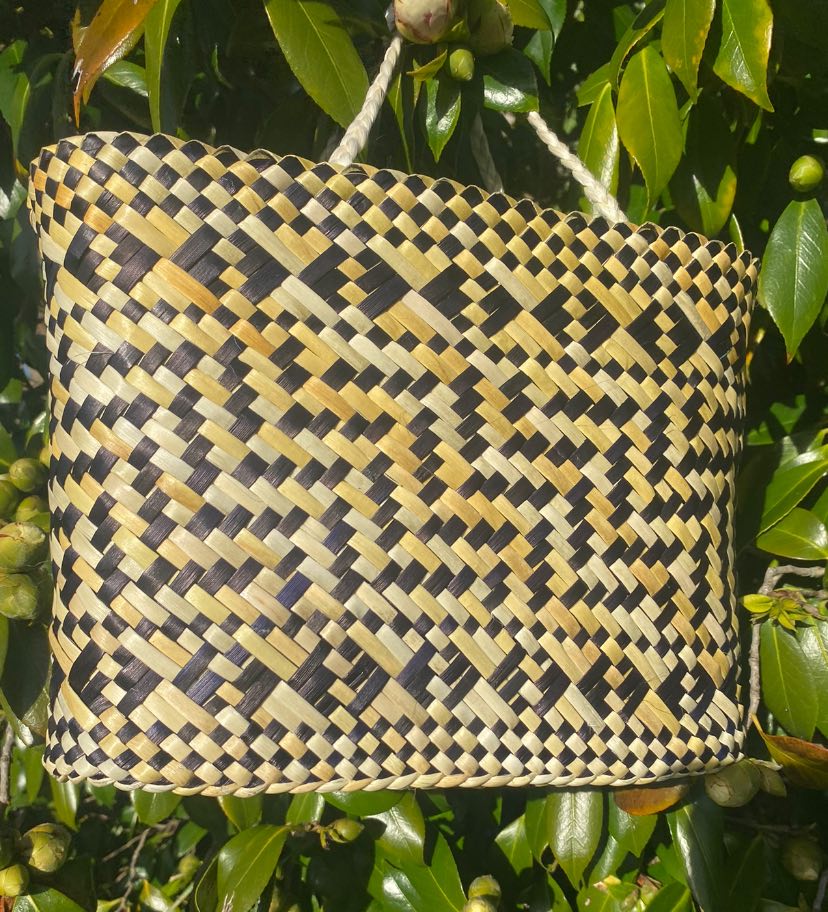
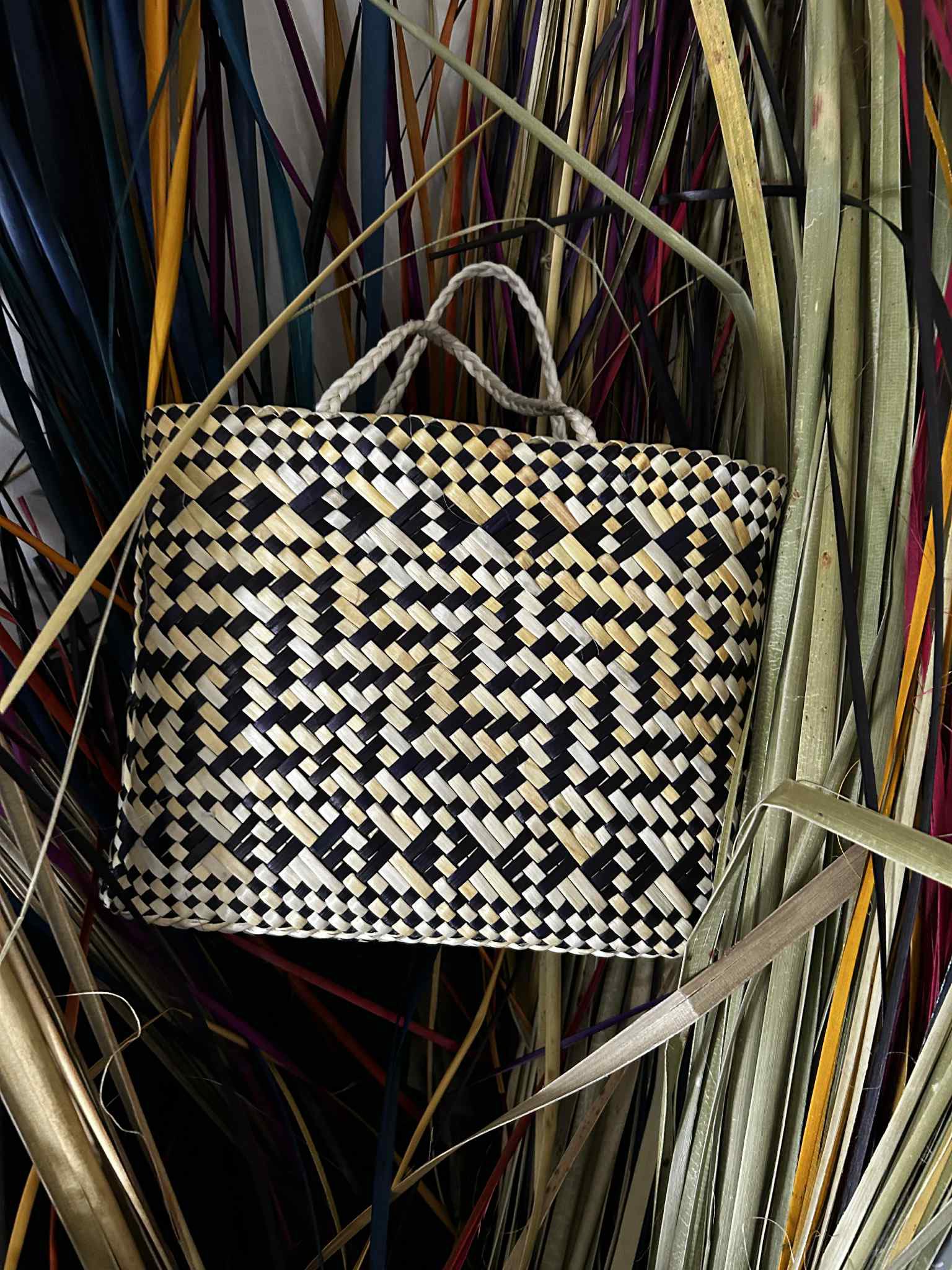

Can you tell me about how you first got started with raranga? What inspired you to begin weaving?
I grew up around weavers and the weaving arts. I was always with my mum and aunties when they were weaving. I learned how to clean flax, harvest it, make plaits, and do putipitu at a young age. I really started getting into weaving during lockdown when I had some free time. I then enrolled in a class at Te Wānanga o Aotearoa and developed my skills there.
What does raranga mean to you personally, beyond just the craft itself?
Personally, what I love about weaving is being part of the transmission of knowledge handed down over generations—the mātauranga tuku iho. If we don’t pass down these kinds of arts, they will die, so it’s important we keep them alive by practising them as often as we can.
How do you choose the materials for your kete, and why is sustainability important in your practice?
A big part of weaving is using natural fibres and materials. You could weave with paper or other plants, but using harakeke is part of the mātauranga tuku iho, and taking care of that knowledge means being true to it. Harakeke is readily available and accessible, which is why it’s the chosen material for raranga. I’d also use kiekie and pingao if I could source them.
Harakeke, pingao, and kiekie are naturally renewable. If you harvest respectfully and only take what you need, the plants keep growing for future generations. These are taonga species unique to Aotearoa, so we have a responsibility to care for them. Using sustainable practices ensures the resource will always be there. And because they’re natural, when they’re no longer useful, they return to Papatūānuku—but they can last many years before that happens.
Could you share a story behind one of your favourite kete that you’ve made?
I don’t really have favourites; I love them for the learning they bring and the kaupapa they represent. I rarely make kete ‘to order’ or for commission. I weave what I see, hear, and feel. Just this past weekend, I watched my son on stage doing hakas and made a kete inspired by his rōpū—the pattern and whakapapa I created for that kaupapa. I gifted it to my son, so today, that’s my favourite kete.
What challenges did you face when you first started thinking about selling your kete, and how did you overcome them?
I was whakamaa about selling my taonga because I felt they might not be good enough, or that people might criticise my weaving or me. I love sharing my taonga for the joy and aroha they bring to others. I don’t sell them for personal gain; it’s usually to fund my son’s sports or donate to fundraisers. I also give away about half of what I make, because it brings me joy to see others enjoy them.
How do you balance honouring traditional methods and designs with bringing your own creativity and style into your work?
With my aunty, uncle, and mum, creativity and innovation are nurtured. If I create something new and that technique or pattern is adopted by others, it becomes part of the mātauranga tuku iho. That’s a huge honour for me.
What advice would you give to young people who might want to explore raranga or other traditional arts?
I’d say, give it a go. Like any skill, it takes practice. Within weaving, there are many elements—you might excel at all of them, or just kete, or just potae (hats), and that’s fine. Like te reo, it keeps our culture alive and thriving.
How does weaving fit into your everyday life alongside work, whānau, and other commitments?
I’ve come to a place in my life where I understand the need for balance. As a Māori, weaving fuels my spirit. Creativity feeds your soul, and weaving is both physically and mentally challenging—the patterns, the sitting, the focus. For example, my aunty is 73, a weaver, physically strong, and her skin is great—showing how weaving nurtures both body and mind.
What’s the first kete you ever made, and do you still have it?
The first kete I ever made was a kete whiri, and I gave it to my aunty. I was about 11 or 12.
What is the process of making a kete or taonga raranga?
I start by selecting the bush and harvesting the harakeke. I clean the strands, removing any damaged or drying ones so the plant can thrive. Then I take the best strands, strip them, cut them to size using a haehae (splitter), and begin weaving.
If I’m dyeing the flax, the process is longer: I boil it, let it dry, then hapene it (soften using a flat tool), dye it, dry it again, and hapene it once more. Green whenu (strands) are boiled once, while dyed whenu are boiled twice.
Every weaver has their own way of doing things—there’s no right or wrong—but the perfect way is the way that works for me.